Porto vs Lisbon Wine Tours: Which Portuguese Wine City is Right for You?
I Did Both Porto and Lisbon Wine Tours: Where They Really Differ
I was on the Cais da Ribeira at 6 AM before the city woke up, and the fog was sitting on the Douro like a blanket. The only other person was an old man polishing the brass on a rabelo boat, the traditional port vessel. He told me he'd been doing this same job since 1972. "Every morning the river looks different," he said. "And every morning I find something new to love about it." That's the Porto nobody sees.
We earn a commission when you book through our links on Viator (PID P00303273), at no extra cost to you. This is how we keep the site free. Learn more →
But: I've also spent three weeks in Lisbon over the past two years, specifically to answer the question that keeps coming up from travellers: Porto vs Lisbon wine tours, which one should you choose? I've led private groups in both cities, tasted my way through Alentejo's cork forests and the Douro's schist terraces, and I've developed a clear opinion. It's not flattering to my hometown in every way.
Let me save you the research. If you love fortified wine, dramatic river valleys, and the feeling of stepping into a living history book, Porto wins, no contest. The Douro Valley is the world's oldest demarcated wine region (1756), and the Vila Nova de Gaia cellars have over a dozen port lodges within a 20-minute walk. But if you want variety, fresh Vinho Verde, bold Alentejo reds, crisp Setúbal Moscatels, and you prefer a city that doubles as a food capital, Lisbon offers a broader, more flexible wine experience. I booked a Douro Valley full-day wine tour from Porto to test the gold standard, and I'll break down exactly what each city delivers.
The Porto Wine Tour Experience
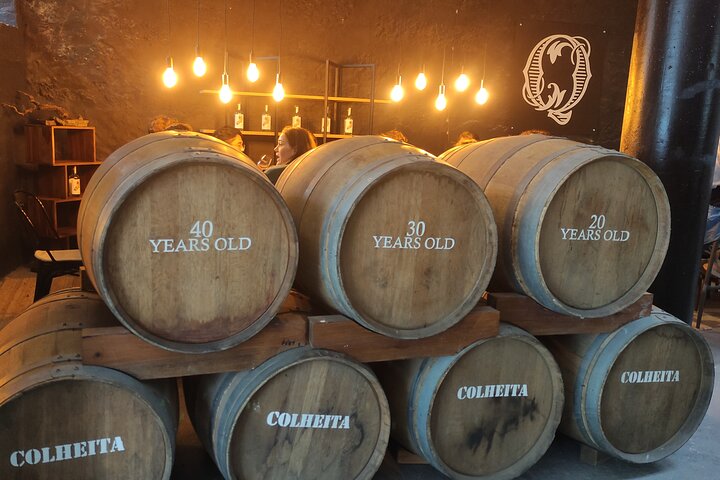
Let's start with the obvious: Porto's wine tourism is built around port, a fortified wine that's been aged in barrels for decades. The Gaia waterfront is a straight line of lodges: Graham's, Taylor's, Cálem, Ramos Pinto, Sandeman. You can walk from one to the next in under five minutes. The tours are short (45-90 minutes), the tastings are generous, and the views across the Douro to Porto's old town are postcard-perfect.
I took a group to Graham's Lodge at 10 AM opening booked this guided tour, and we had the terrace to ourselves. The guide was a real wine professional, not a script-reader. We tasted three ports: a crisp Dry White, a 10-year Tawny (dried figs, almond, a whisper of caramel), and a 20-year Tawny that coats your mouth like velvet. The terrace bar stays open until 7 PM in summer, and the light over Porto at golden hour makes every photo look like a lie.
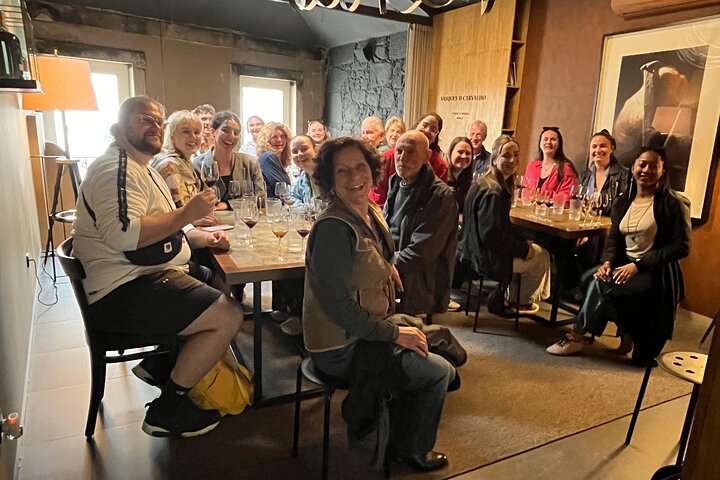
But here's the catch: Porto is almost exclusively about port. Yes, you can find Douro table wines (reds and whites from the same region), but the infrastructure, the history, and the tourist expectations all point to fortified wine. If you don't love port, and I've met people who genuinely don't, Porto's wine scene can feel one-note. I had a couple book a private tour with me who said they "hated port." Fifteen years of guiding, and I'd never heard anyone say that outright. I asked why. "Too sweet, too heavy, too much." So I took them to Niepoort and asked Francisco to pour them a Dry White Port, something most tourists never try. Then an unfiltered LBV. Then a 30-year Tawny that tasted of dried figs and dark chocolate. The wife looked at her husband and said, "I guess we don't hate port." They left with a case. Best €400 I ever earned for a guide.
The most overpriced cellar tour in Porto is, without question, Sandeman. I say this as someone who worked in the industry for a decade. You're paying for the brand, not the wine. The actual tasting experience at Graham's costs the same and is exponentially better. Which cellar do I secretly love that everyone overlooks? Ramos Pinto. The art deco interior, the quiet courtyard, the fact that they don't rush you through the tasting, it's everything a wine tour should be.
Why Lisbon Nearly Won Me Over
I went to Lisbon expecting to be underwhelmed on wine. I was wrong. The city's strength isn't a single concentrated wine district like Gaia, it's the variety of wine regions within a 90-minute drive. Alentejo is 1.5 hours south, producing bold, sun-drenched reds (Aragonez, Trincadeira) that rival the Douro's best. The Setúbal Peninsula is 40 minutes away, home to sweet Moscatel de Setúbal and crisp white wines. And the Vinho Verde region, Portugal's most popular DOC, stretches up the coast, accessible from both cities but closer to Porto.
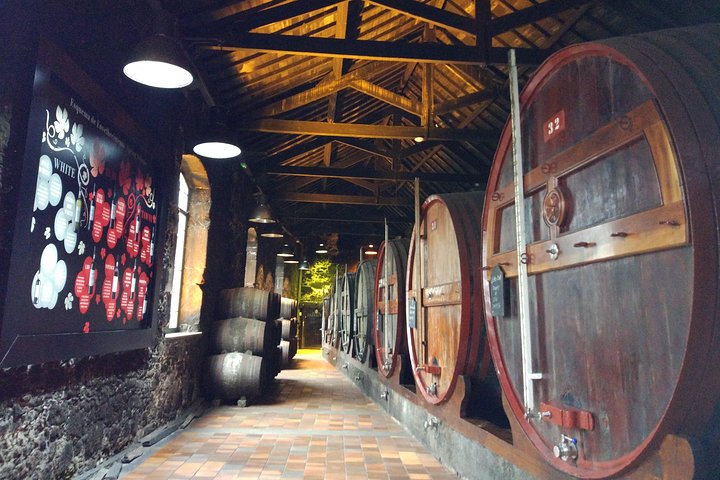
I joined a small-group Alentejo wine tour from Lisbon and was genuinely impressed. The guide was a sommelier who'd worked in Évora for a decade. We visited two family-run quintas, not the polished tourist estates you find in the Douro, and tasted a 2018 Alicante Bouschet that smelled of blackberries and sun-baked earth. Lunch was at a tasca in the village of Arraiolos, where the owner brought out a plate of presunto and sheep's cheese and poured us a glass of the local red from a clay pitcher. No script, no rush, just wine.
But Lisbon has a problem: it lacks a wine tourism hub. There's no Gaia equivalent, no riverside strip of cellars where you can walk between tastings. The wine bars are scattered across the city (try Vinho no Bairro in Chiado or Garrafa in Príncipe Real), and the day trips require a full-day commitment. You can't just pop into a cellar for 45 minutes like in Porto. That matters if you're short on time.
The Lisbon Wine Tour Experience
Lisbon's wine tours are almost entirely day trips. The most popular options are Alentejo (1.5 hours each way, €90-130 per person) and Setúbal (40 minutes, €70-100). The tours are well-organised, the guides are knowledgeable, and the wines are excellent. But the driving time eats into your day. You'll spend 3-4 hours in transit for a 5-hour tasting experience. In Porto, you can be in the Douro Valley in 30 minutes, tasting by 10:30 AM.
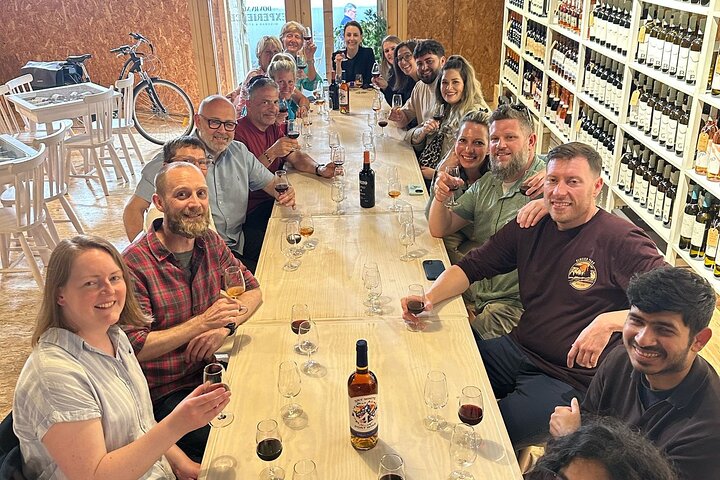
One thing Lisbon does better: food markets. Mercado da Ribeira (Time Out Market) has a wine bar run by a sommelier who'll pour you a flight of Portuguese reds for €12. Mercado de Campo de Ourique has a tiny corner shop, Adega do Mercado, where the owner, Sr. Joaquim, will open any bottle you point at. Porto has Mercado do Bolhão, but it's less polished, more about produce than wine-by-the-glass. The basement Adega do Bolhão is worth the visit (Sr. António has been there 30 years and will open any bottle you're curious about), but it's not the same as Lisbon's ready-to-drink culture.
The Moment I Made My Decision.
I was standing on the terrace at Quinta do Seixo, the Symington family estate in the Douro Valley, when it finally clicked why port is different. The vineyards run straight down to the river in stone-terraced rows that look like they've been there since the Romans, which they basically have. My group that day was a couple from Chicago who'd never had anything stronger than Moscato, and a retired Welsh teacher who could name every vintage back to '85. The guide handled it perfectly: poured them each a different style, let them find their own preferences. The Chicago couple fell hard for a White Port and Tonic (the Portuguese answer to the Aperol Spritz, less sweet, more herbal). The Welshman ordered a case of the '94 Vintage. For me, it was the 10-year Tawny from the estate's own blend, walnuts, caramel, a finish that lingers like a good story. The drive back along the N222, voted one of the world's best driving roads, with the river glowing orange in the sunset, was the perfect epilogue.
But here's f you're a wine lover who wants to taste everything Portugal offers, not just port, Lisbon gives you more. The Alentejo reds, the Setúbal Moscatels, the Vinho Verde from the coast, it's a broader palette. Porto is a specialist. Lisbon is a generalist. Both are excellent. Which one you choose depends on what kind of wine traveller you are.
I once took a group to Quinta do Crasto for a tasting and lunch. The lunch lasted four hours, grilled lamb, roasted chestnuts, several bottles of Douro red, and port from the estate's own cellar. The owner sat with us, telling stories about growing up on the quinta in the 1960s when there was no road access. Everything came by rabelo boat. "We didn't know we were poor," he said. "We had the river, and we had wine. That was enough." That's the Douro Valley in a sentence. You can't replicate that feeling in Lisbon. But you can find a different kind of magic, the quiet intimacy of a family-run quinta in Alentejo, the surprise of a perfect Moscatel, the way a Vinho Verde spritzes your palate on a hot afternoon.
What I Wish I'd Known Before I Went
I've made every mistake in the book, and I've seen my clients make them too. Here's what I wish someone had told me before I started guiding wine tours in both cities.
- Book Gaia cellars at 10 AM or 5 PM. July afternoons are a nightmare, the cellars aren't air-conditioned, and the crowds make the tastings feel like a conveyor belt. I've watched tourists sweat through a 20-year Tawny and not taste a thing. Morning light is better for photos anyway.
- Wear comfortable shoes. Graham's, Taylor's, and Offley are all up steep hills. I've seen women in wedges give up halfway up the Rua do Agro. The Gaia waterfront looks flat from the other side of the river, it's not.
- Don't buy a cheap 'wine tour' from a kiosk on the Ribeira. These are often just boat rides with a plastic cup of cheap Ruby. Book through Viator or directly with the lodge for genuine tastings. I've rescued too many disappointed tourists from these scams.
- Take the Gaia cable car one-way. Buy a single up (€9) and walk down through the Jardim do Morro and the cellars. Better views and you'll stumble into tastings along the way. The round-trip is a waste of €3.
- Never wear white to a port tasting. That deep red stain from a Vintage Port will not come out of a linen shirt. I've watched it happen to too many tourists, including myself once, on a €200 linen shirt. Learn from my pain.
- Don't spit port at a tasting. It's acceptable at wine tastings, but in Porto's culture, finishing your glass is a sign of respect. The pours are small for a reason. If you're driving, book a tour that includes transport.
- The Douro Valley is not accessible by public transport for winery hopping. Buses are hourly and unreliable. The train only serves the riverbank; most quintas are up steep hillsides. Book a tour or hire a car. I tried the train-to-Pinhão-and-walk approach once, ended up hitchhiking back to Régua.
- Don't order a Vintage Port in a casual restaurant. Very few restaurants serve it properly (decanted, at the right temperature). Stick to Tawny or Ruby. Save Vintage for a dedicated tasting at a lodge.
- The best value port tasting in Gaia isn't at a famous lodge. It's at the Portologia shop on Rua dos Canastreiros. €10 for 3 guided tastings with an expert who actually trained as a sommelier. No crowds, no script, just wine.
I discovered the hidden Fado bar on Rua de São João by accident. I was wandering after a late tasting, heard a voice through an open window, and followed the sound. It was a tiny room with blue tiles and a single guitarist. A woman in her 70s was singing, raw, unpolished, her voice cracking on the high notes. There were four of us in the audience. She sang about longing and the sea and a lover who never came back. When she finished, she poured herself a glass of red and joined us at the table. That night taught me that the best Fado in Porto doesn't have a sign or a cover charge. It finds you if you're listening.
For a broader comparison of Portuguese wine regions, read our guide to Douro Valley wine tours. And if you're still undecided between cities, our full wine tour guide covers every major region from the Minho to the Algarve.
⚠️ Who this is not for: This comparison isn't for anyone who only drinks table wine, port is a fortified wine with a distinct sweetness profile, and if you prefer dry reds, Lisbon's wine scene may suit you better.
Frequently Asked Questions
Which city is better for wine tours: Porto or Lisbon?
Porto is better if you love fortified wine (port) and want a concentrated, walkable cellar district with 10+ lodges within 20 minutes. Lisbon is better if you want variety, Alentejo reds, Setúbal Moscatels, Vinho Verde, and prefer day trips to family-run quintas.
How far is the Douro Valley from Porto?
The Douro Valley starts about 30 minutes east of Porto. The wine town of Pinhão is 2 hours by train from São Bento station (€12 one-way). Most day tours cover the drive in 1-1.5 hours each way.
Can you do wine tours from Lisbon without a car?
Yes, but you'll need a guided tour. Alentejo day trips run €90-130 per person and include transport, tastings, and lunch. Setúbal tours are cheaper (€70-100) and closer. Public transport to wineries is unreliable.
What is the most overpriced wine tour in Porto?
Sandeman. You're paying for the brand and the black cape logo. The tour is scripted, the tasting is one glass of average Ruby, and it costs €25. Graham's at the same price gives you three proper tastings and a real wine professional.
Which city has better food markets for wine?
Lisbon has better ready-to-drink wine culture at markets like Time Out Market and Mercado de Campo de Ourique. Porto's Mercado do Bolhão is more about produce, but the basement Adega do Bolhão (run by Sr. António) is a lesser-known spot for tasting before buying.
What is the best time of year for wine tours in Porto and Lisbon?
Spring (April-June) is ideal for both, mild weather, green vineyards, fewer crowds. Harvest season (September-October) is exciting but busy. Summer (July-August) is hot (30-38°C in the Douro) and crowded. Winter tours are quieter but some lodges have reduced hours.